

"Strategic Steps Towards Russia's Digital Ecosystem"
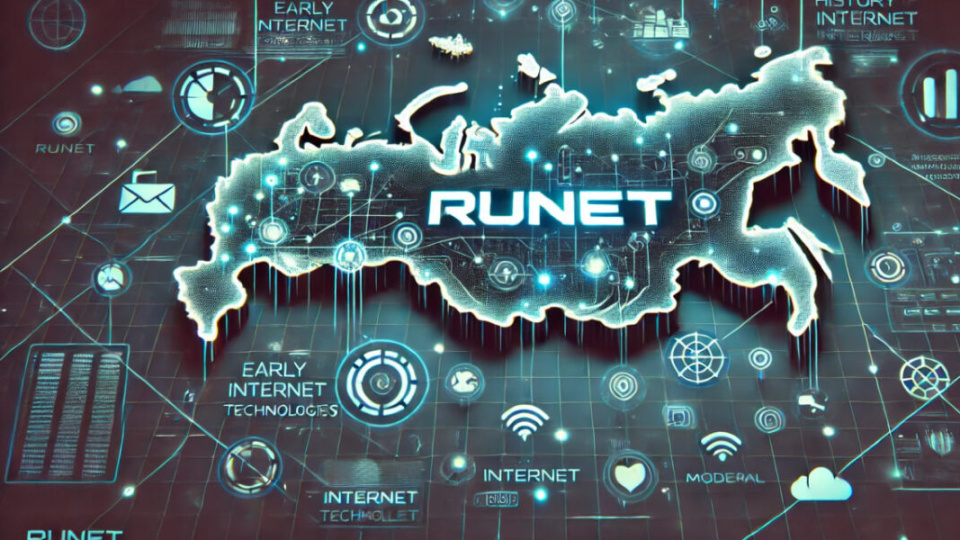
Russia is Building Its Own Digital Ecosystem
As a result of extensive sanctions imposed by Western countries, economic tension in Russia is also manifesting in the digital realm. Russia's Federal Service for Supervision of Communications, Information Technology and Mass Media (Roskomnadzor) has largely centralized the control of internet traffic through legal regulations.
Banning Western Platforms and Local Alternatives
Meta's classification of Facebook and Instagram as "extremist organizations" and the blocking of platforms such as X and YouTube have led to significant changes in the digital habits of Russian users. In this context, millions of users, driven by the banning of Western-based platforms, have turned to local alternatives, contributing to the rapid growth of applications such as VKontakte (VK) and Telegram.
On the other hand, WhatsApp has been completely blocked, while Telegram is also facing restrictions. The newly introduced local application MAX has quickly gained popularity, especially among public institutions, currently reaching 70 million users.
Digital Transformation and State Surveillance
Experts indicate that this digital transformation is not limited to a mere shift in platforms; rather, user data is being collected on Russian servers, thus increasing the state's surveillance capacity.
Control Over VPN and Legal Regulations
The "Technical Means for Counteracting Threats (TSPU)" system developed by Russia for internet control has been integrated into all telecommunications operators under the "Sovereign Internet Law," which came into effect in 2019. This system makes it possible to manage internet traffic from a centralized point.
Using DPI (Deep Packet Inspection) technology, TSPU can analyze data based on its content, particularly applying "bandwidth throttling" on the popular YouTube platform to reduce access and negatively impact user experience.
Although the demand for VPNs among Russian users has increased, starting from 2024, the prohibition of promoting VPN services and the imposition of restrictions on popular protocols is noteworthy.
RuNet: An Independent Internet Project
Russia's long-term goal is to create an autonomous network infrastructure that can continue to function even if it disconnects from the global internet. Under the RuNet project, steps such as the establishment of national DNS servers and the mandatory use of only domestic software by the state are being taken.
Additionally, there are plans to turn the portal GosUslugi into a "digital identity" for internet access, effectively eliminating anonymity on the internet.
Local Digital Media and Content Production
While access to the powerful Western platform YouTube is blocked, support is being provided for local platforms such as VK Video and RuTube. Incentives offered to local content producers are causing Russian digital media to shift its focus from the West to the East.
However, the RuNet project is facing hardware issues due to sanctions. The withdrawal of Western suppliers such as Intel, AMD, and Cisco is complicating the development of data centers. Although Russia is trying to overcome this situation with Chinese suppliers and parallel imports, it is observed that it lags behind in areas requiring high processing power.
```Sizin İçin Derlendi



Benzer Haberler


.png)
Yakında Tüm Platformlarda
Sizlere kesintisiz haber ve analizi en hızlı şekilde ulaştırmak için. Yakında tüm platformlarda...
.png)